Posts mit dem Label History werden angezeigt. Alle Posts anzeigen

Mittwoch, 26. Februar 2014

Mapping The Soundscape

Mapping The Soundscape: Electro-acoustic Composition and Place-making in Interactive Sound Maps
by

Abstract:
"With the recent availability of open source application programming interfaces for digital mapping, programmers have been able create applications that literally put music and sound on the map. Since the mid-2000s, sound artists, electroacoustic composers and archivists have been able to use digital resources to map their field recordings, most popular of which has been Google Maps. Many of these maps allow for users to upload their own recordings, creating maps with thousands of sound clips. This presentation aims to explore the possibility of musicological scholarship concerning practices of digital mapping of music and sound on computers, tablets and smartphones.
This presentation will provide a history of sound mapping as used by sound recordists and composers.  Beginning with Tony Schwartz’ sound documentary form which examples of this New York 19 and The World in My Mailbox, I will explain how these recordings establish a sense of place.

Bibliography on Noise Pollution

"If waste is, broadly defined, the externalities of social and technical systems, then noise is a quintessential form of waste. Noise pollution is disturbing or excessive sound that may harm humans or animals, and, not surprisingly, it usually emits from industrial technologies. Perhaps because it exceeds the material fetish of most pollution laws, it wasn’t until the 1970s (1975 in Portland, to be exact) that U.S. governments promoted noise from a “nuisance” to f a full fledged environmental problem like its material cousins in the pollution panoply. Yet, noise remains a generally neglected source for the theorization of waste, pollution, and harm. If you are interested in remedying the situation, here is a bibliography for you:"

http://discardstudies.wordpress.com/2013/10/21/bibliography-on-noise-pollution/


Dienstag, 25. Februar 2014

David Grubbs on 1960s recordings

Quelle: The Wire, January 2014, Collateral Damage: David Grubbs on 1960s recordings, http://thewire.co.uk/in-writing/collateral-damage-28138/collateral-damage_david-grubbs-on-1960s-recordings
Newly released recordings of experimental music from the 1960s say more about our own time than the moment of their creation, argues David Grubbs.

[...] When encountering this music in the form of new releases of archival recordings, we are and we aren’t listening to experimental practices from the 1960s. Access to previously unavailable recordings makes for a listening experience that’s often unrecognisable to the originators of such activities. With archival recordings, it’s not only a matter of being outside of the time of its creation (the joint is out of time); older recordings – accessed now, resuscitated now – actively participate in our present moment. [...]

SOUNDMAPPING: Critiques And Reflections On This New Publicly Engaging Medium


"Soundmaps have captured the imagination of acoustic communities, libraries and radio stations alike. These interactive maps have placed soundscape collections and research in a more public and interactive space than ever before. However, does this new form reflect some of the polarizations of past sound projects or are there new fractures to be considered, such as gender, economy and the domestic/public divide? This paper will reflect upon the challenges and hierarchies that have developed alongside this new medium and will begin to critique and question this new form of sound engagement. [...]"
by Jacqueline Waldock
Source: Journal of Sonic Studies, volume 1, nr. 1 (October 2011) 
http://journal.sonicstudies.org/vol01/nr01/a08

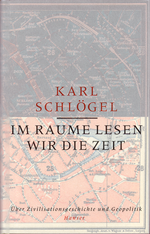
Karl Schlögel - Im Raume lesen wir die Zeit

Karl Schlögel - Im Raume lesen wir die Zeit
Rezensiert für H-Soz-u-Kult von:
Albrecht Weisker, Fakultät für Geschichtswissenschaft, Philosophie und Theologie, Universität Bielefeld

"Herunter vom "Hochsitz der Lektüre"! Raus aus der Bibliothek! Öffnet die Augen! Schärft alle Sinne, um die historische Wahrnehmung endlich wieder um ihre räumliche Dimension zu bereichern! So schallt der Mahnruf von Karl Schlögel aus dem vergangenen Bücherherbst herüber in das Jahr des 45. Deutschen Historikertages, der unter dem Generalmotto "Kommunikation und Raum" steht. Geschichte, so der Autor, gehe weder in theoriegeleiteten Textinterpretationen oder gewundenen Diskursanalysen auf, noch sei sie ortlos. Ganz im Gegenteil. Sie umfasst eine Vielzahl konkreter Räume, realer Landschaften, echter Schauplätze und Tatorte, die es aufzusuchen lohnt. "Stellt Euch dem Reichtum der Wirklichkeit, entdeckt die Fülle des Konkreten", lautet deshalb Schlögels Botschaft an die zuweilen allzu routiniert arbeitenden akademischen Spurensucher der Historikerzunft. Geschichtswissenschaft betrachtet Schlögel als eine Wirklichkeitswissenschaft ersten Ranges. Und als Stoßseufzer fügt er hinzu: "Es fehlt überall an Leuten, die sich auskennen in der heutigen Welt."
History takes place: Schauplätze aufsuchen, Spuren sichern."
http://hsozkult.geschichte.hu-berlin.de/rezensionen/2004-1-151


Labels: History

History,